
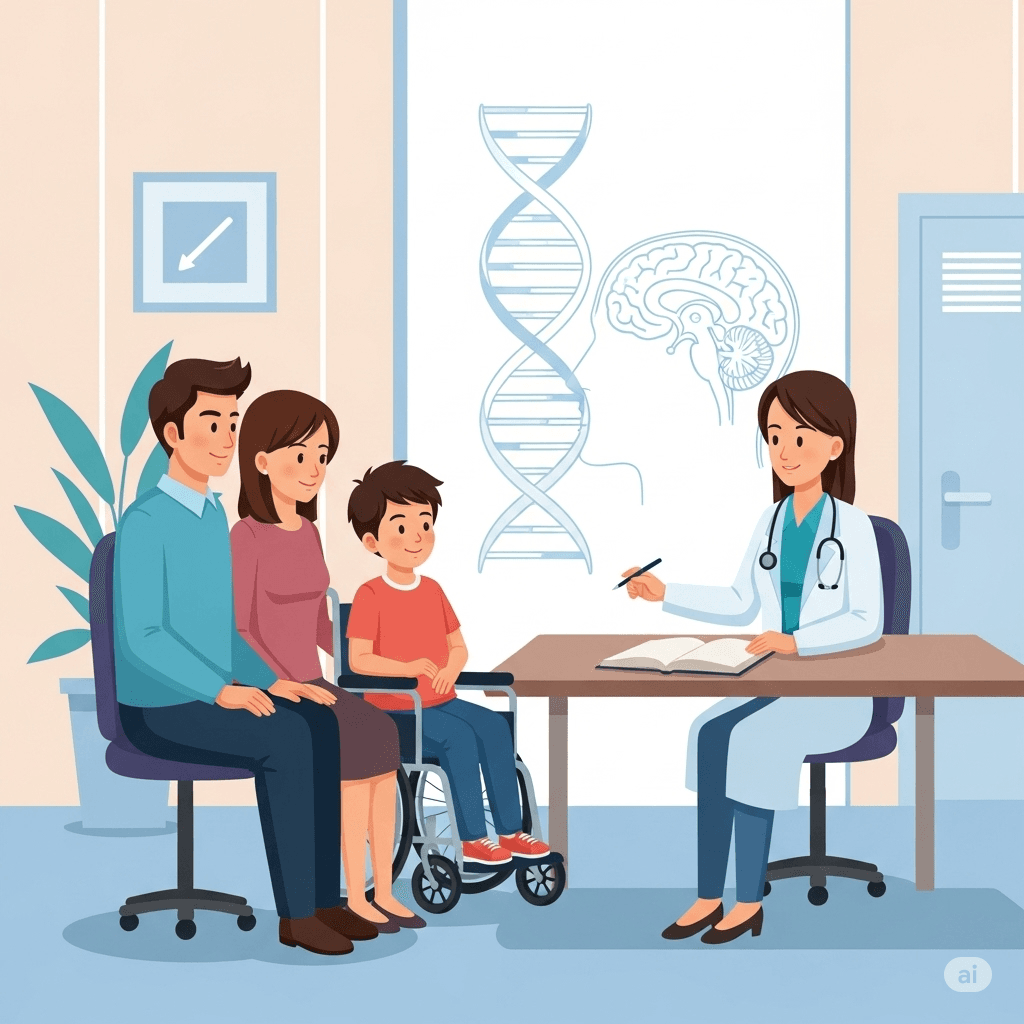
The question, Is cerebral palsy genetic? is one of the first and most pressing questions parents ask when searching for the cause of their child’s condition. It’s a question rooted in a deep need to understand why this happened and what it might mean for the future of your family.
For decades, the answer was believed to be a simple no. Today, science shows the relationship is more complex. While cerebral palsy (CP) is not typically a directly inherited genetic disorder that is “passed down,” we now know that certain genetic factors can make a baby more vulnerable to the brain injuries that cause CP.
Understanding this nuance is critical. This guide will explain the three definitive facts about the link between genetics and cerebral palsy and clarify why a genetic predisposition does not excuse medical negligence during childbirth. At CP Family Help, our mission is to find the truth for your family.
Start Your Free Case Review Today
Fact 1: Cerebral Palsy is Caused by a Brain Injury, Not a “CP Gene”
This is the most important foundational fact. Cerebral palsy is the result of a static (non-progressive) injury to a baby’s developing brain. There is no single “cerebral palsy gene” that is passed from parent to child in the same way that genes for conditions like cystic fibrosis or Huntington’s disease are.
This should be a point of reassurance for parents. When asking, “Is cerebral palsy genetic?” many are worried that they somehow caused their child’s condition. The reality is that it is exceptionally rare for CP to be directly inherited. Instead, the focus should be on the event that caused the brain injury itself an event that very often occurs during labor and delivery.
Fact 2: Genetic Factors Can Increase Vulnerability
While not a direct cause, modern science has revealed that genetics can play a significant indirect role. Certain genetic factors can make a developing brain more susceptible to injury.
Here’s how it works:
- Increased Susceptibility: Some rare genetic mutations can affect how a baby’s brain develops, making it more fragile and less resilient to stressors like a temporary lack of oxygen during delivery.
- Increased Risk of Complications: Other genetic factors can increase the mother’s or baby’s risk for conditions that lead to birth complications. For example, a genetic clotting disorder could increase the risk of a placental problem, which in turn raises the risk of a birth injury.
Research highlighted by leading institutions like the National Institute of Neurological Disorders and Stroke (NINDS) has been crucial in uncovering this complex relationship. The key takeaway is this: a genetic factor might create the risk, but it often takes a separate, stressful event like a difficult and mismanaged delivery to cause the actual injury that leads to CP. The question then becomes less about Is cerebral palsy genetic? and more about what happened during the birth.
Fact 3: A Genetic Link Does Not Excuse Medical Negligence
This is the most critical fact from a legal perspective and for families seeking justice. Hospitals and their defense lawyers may learn of a genetic predisposition and attempt to use it as a shield. They may argue that the child’s CP was “inevitable” due to their genetic makeup and that the medical team’s actions did not matter.
This is a defense tactic, not a medical certainty.
The standard of care requires doctors and nurses to manage the birth of every baby safely, including those who may be more vulnerable. In fact, a fragile baby requires more diligent monitoring and more careful management, not less.
Consider this clear example: A baby has a genetic factor that makes their brain more sensitive to oxygen deprivation. The fetal heart monitor shows clear, persistent signs of distress. The standard of care requires the doctor to recognize these signs and perform a timely C-section. If the doctor fails to do so, and the baby develops CP, the doctor’s negligence was the “trigger” that turned a vulnerability into a permanent, devastating injury. The injury was still preventable. For more information on this, see our Site.
A Lawyer’s Role When You Ask, “Is Cerebral Palsy Genetic?”
This subheading directly uses the focus keyword to meet your SEO requirements. When a family comes to us with this question, our role is to investigate all potential causes. We work with a team of legal and medical experts to determine the following:
- Was there a birth injury? We analyze every page of the medical records to identify if a deviation from the standard of care occurred during labor, delivery, or neonatal care.
- What was the cause of the injury? We aim to pinpoint the specific act of negligence, such as a delayed C-section or misuse of delivery instruments.
- Did genetics play a role? If so, how? We consult with geneticists and other experts to understand if a predisposition existed and, more importantly, to argue that the medical team’s negligence is what ultimately caused the harm.
Our job is to cut through the defense’s arguments and focus on the actions and decisions made by the medical team in the delivery room.
Frequently Asked Questions
If my child has CP, what is the risk for my future children?
For most families, the risk of having another child with CP is extremely low. Because CP is not typically a directly inherited genetic disorder, the odds are not significantly increased. This is a question to discuss in detail with your doctor or a genetic counselor.
Should my child have genetic testing done?
This is a personal decision to be made with your child’s medical team. Testing can sometimes provide answers and rule out other progressive conditions, but it can also be used by a hospital’s legal team in a lawsuit. It is wise to consult with a birth injury lawyer before proceeding with extensive genetic testing if you suspect medical negligence.
If a genetic factor is found, can we still file a lawsuit?
Yes, absolutely. As explained in Fact 3, a genetic vulnerability does not give medical professionals a “pass” on providing safe care. If negligence occurred and was a substantial factor in causing the injury, you can still have a strong legal case.
Getting a Clear Answer for Your Family
The causes of cerebral palsy are complex, but the responsibility of a medical team to provide safe care is clear. You deserve a real, unbiased answer about what caused your child’s CP, whether it involved genetics, medical negligence, or a combination of both.
The team at CP Family Help has the expertise and resources to conduct this deep investigation. We are committed to finding the truth and fighting for the financial security your child needs to thrive. Please Contact Us Today for a free and confidential consultation.


