
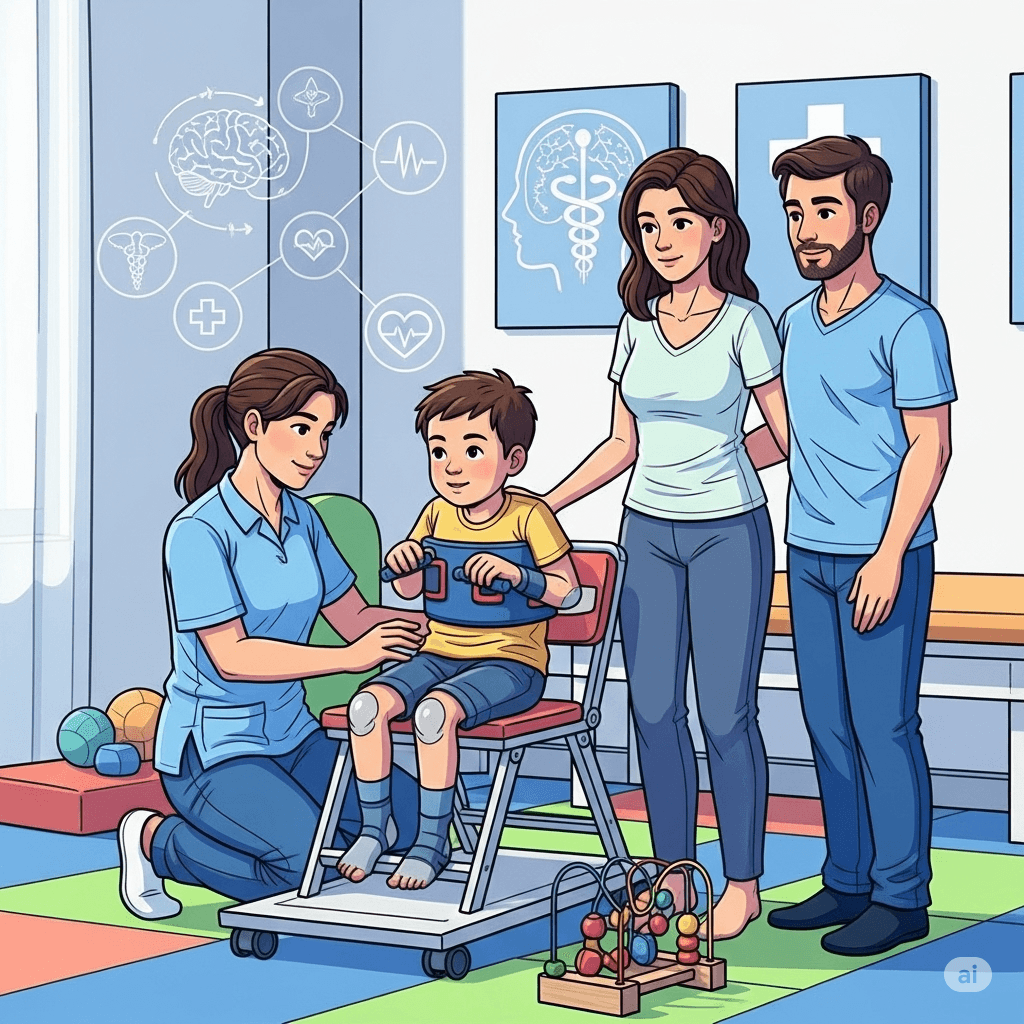
The landscape of Cerebral Palsy treatments is constantly evolving, and in 2025, families have more hope and more options than ever before to help their children reach their full potential. A diagnosis of cerebral palsy (CP) marks the beginning of a lifelong journey of care, management, and therapy. For parents, navigating this path means seeking out the most effective interventions available.
Understanding the full range of modern Cerebral Palsy treatments is the first step toward creating a comprehensive care plan for your child. The second, equally important step is understanding the significant costs involved.
At CP Family Help, we believe every child deserves access to the best possible care. This guide provides an overview of the most effective traditional and cutting-edge Cerebral Palsy treatments available today, discusses their costs, and explains how families can secure the financial resources needed to access them often through legal action when CP was caused by a preventable birth injury.
The Core Goal of Cerebral Palsy Treatments: Maximizing Potential
There is currently no “cure” for cerebral palsy, as the underlying brain injury is permanent. Therefore, the primary goal of all Cerebral Palsy treatments is to manage symptoms and maximize a person’s potential. A multi-disciplinary team of specialists works together to:
- Improve mobility and motor skills
- Manage pain and muscle spasticity
- Increase communication abilities
- Foster independence in daily life
- Enhance overall quality of life
Foundational Therapies: The Building Blocks of CP Care
Consistent, high-quality therapy is the cornerstone of CP management. These foundational therapies are essential for neuroplasticity—the brain’s ability to reorganize itself by forming new neural connections.
Physical Therapy (PT)
Physical therapy is critical for improving gross motor skills. A physical therapist works with a child on strength, flexibility, balance, and coordination. The goal is to prevent muscle contractures (the permanent shortening of a muscle) and improve functional mobility, such as sitting, standing, and walking.
Occupational Therapy (OT)
Occupational therapy focuses on fine motor skills and the skills needed for activities of daily living (ADLs). An occupational therapist helps a child learn to perform tasks like dressing, eating, bathing, and writing. They are also experts in recommending adaptive equipment to make these tasks easier.
Speech and Language Therapy
Many children with CP have difficulty with the muscles controlling the mouth and tongue, a condition known as dysarthria. Speech therapists help improve articulation and communication. For children who are non-verbal, they are instrumental in implementing augmentative and alternative communication (AAC) devices. They also address swallowing difficulties (dysphagia), which are common and can lead to feeding problems.
These ongoing therapies represent a significant, lifelong cost and are a central component of any lawsuit seeking funds for Cerebral Palsy treatments.
Medical and Surgical Interventions in 2025
For children with moderate to severe CP, therapy alone may not be enough to manage spasticity and orthopedic issues.
Medications
Oral muscle relaxants like Baclofen can help reduce muscle tightness. For more severe, widespread spasticity, a surgeon can implant a Baclofen pump, which delivers the medication directly to the spinal fluid for a more powerful effect. Botox injections are also commonly used to target and relax specific, spastic muscles.
Orthopedic Surgery
As a child grows, uneven muscle pull can cause deformities in bones and joints. Orthopedic surgeons can perform procedures like tendon-lengthening surgery to release tight muscles or an osteotomy (cutting and realigning a bone) to correct hip displacement and improve posture.
Selective Dorsal Rhizotomy (SDR) Surgery
Considered one of the most effective and transformative Cerebral Palsy treatments for spastic diplegia, SDR is an advanced neurosurgical procedure. A surgeon identifies and selectively cuts the overactive sensory nerve fibers in the spinal cord that are causing spasticity in the legs. This can permanently reduce or eliminate stiffness, dramatically improving a child’s ability to walk.
Cutting-Edge and Emerging Global Options
The world of Cerebral Palsy treatments is also seeing exciting innovation, with some options being explored globally.
- Stem Cell Therapy: While still largely experimental in the United States, stem cell therapy is being researched in clinics around the world. The theory is that these cells can help repair or replace damaged brain tissue. It is an extremely expensive option, not covered by insurance, and its efficacy is still under review.
- Advanced Robotics and Exoskeletons: Technology is playing a larger role in physical therapy. Robotic-assisted devices and wearable exoskeletons can help children practice walking patterns with more precision and for longer durations, potentially accelerating motor learning.
- Hyperbaric Oxygen Therapy (HBOT): This involves breathing pure oxygen in a pressurized room. While some families explore it as a complementary therapy, its clinical evidence for improving CP symptoms remains highly debated within the mainstream medical community.
The Staggering Cost of Care & How a Lawsuit Can Help
According to the CDC, the lifetime cost of care for a person with cerebral palsy can easily exceed $1 million, and for those with severe CP, it can be many times higher. The most effective and advanced Cerebral Palsy treatments, like SDR surgery or ongoing intensive therapy, are often not fully covered by insurance.
This is where legal help becomes critical. If your child’s CP was caused by a preventable medical error during birth, your family should not have to bear this immense financial burden alone.
A successful medical malpractice lawsuit can provide the funds necessary to access the very best care for your child’s entire life. This is the primary way families can afford the full range of Cerebral Palsy treatments their child needs and deserves.
Frequently Asked Questions
How do we know which Cerebral Palsy treatments are right for our child?
The best approach is to work with a team of specialists, including a pediatric neurologist and physiatrist (rehabilitation medicine doctor). They can perform a comprehensive evaluation and recommend a personalized treatment plan based on your child’s specific type of CP, symptoms, and goals.
Will insurance cover advanced treatments like SDR surgery or stem cell therapy?
Insurance companies will often cover established procedures like SDR if they are deemed medically necessary, though this can require a fight. Experimental treatments like stem cell therapy are almost never covered. A lawsuit settlement can provide the funds to pursue options that insurance denies.
How does a lawsuit settlement get structured to pay for a lifetime of care?
A settlement is based on a detailed Life Care Plan that projects all future costs. The funds are typically placed into a Special Needs Trust. This legal structure allows the money to be used for your child’s care without disqualifying them from essential government benefits like Medicaid or SSI.
Let Us Help You Secure Your Child’s Future
While the advancements in Cerebral Palsy treatments in 2025 are exciting, they remain out of reach for many families due to the extraordinary costs. At CP Family Help, our mission is to investigate the cause of your child’s cerebral palsy. If negligence was involved, we will fight tirelessly to secure the financial compensation needed to give them access to every possible treatment and opportunity.
Contact us today for a free, confidential case review. Let us help you plan for your child’s future


